
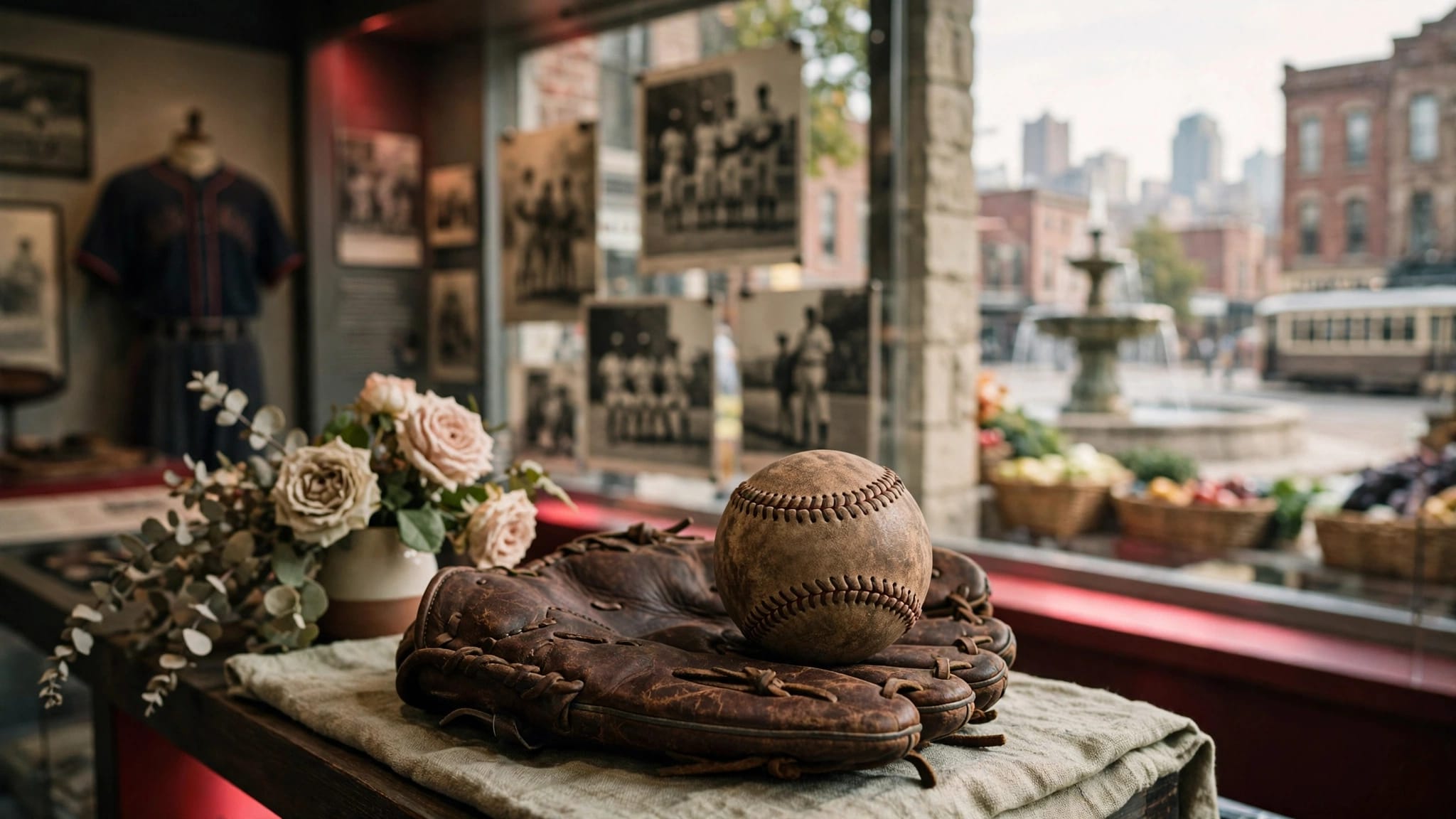
Negro Leagues Baseball Museum: A First-Timer’s Guide

Give yourself more time than you think you’ll need at this historic museum. You might arrive knowing a few famous names, then find yourself reading about a team, a road trip, or a player you’d never heard of.
That’s what makes this Kansas City stop worth slowing down for, whether you’re one of the baseball fans who follow the game closely or someone who couldn’t tell you who’s leading the division.
Start with the practical details, then leave room for the stories inside.
Key Takeaways
- Plan for 90 minutes to two hours in the galleries, and check current hours, holiday schedules, admission, and parking details before you go.
- The museum at 1616 E. 18th St. is in Kansas City’s historic 18th & Vine District, where the Negro National League was organized in 1920 and the Kansas City Monarchs became one of Black baseball’s best-known teams.
- Take your time with the Field of Legends, exhibits, photographs, uniforms, and memorabilia; they connect celebrated players with the teams, communities, and conditions that shaped their careers.
- You don’t need to be a baseball fan to enjoy the visit. The museum shares a broader story of Black achievement, segregation, and civil rights, and it’s easy to pair with the American Jazz Museum nearby.
Planning Your Negro Leagues Baseball Museum Visit
The Negro Leagues Baseball Museum is at 1616 E. 18th St., Kansas City, Missouri, in the historic 18th & Vine District. It shares a building with the American Jazz Museum, so pairing the two is easy. For arrival planning, check your route into Kansas City before you leave, especially during local events.
Hours and how much time to allow
The posted regular hours are:
| Day | Regular hours |
|---|---|
| Tuesday through Saturday | 10 a.m. to 5 p.m. |
| Sunday | Noon to 5 p.m. |
| Monday | Closed, except summer Mondays in June through August |
The Monday exception matters. If you’re visiting in September, don’t carry over somebody else’s summer itinerary.
Museum visitors should confirm holiday schedules and special-event access before heading over. Call 816-221-1920 with questions.
The museum recommends at least an hour for its self-guided gallery. I’d budget 90 minutes to two hours for a first visit. Give yourself closer to three if you enjoy reading every panel and watching the films.
Admission and buying tickets
Posted admission is $15 for adults, $12 for seniors ages 65 and older, and $12 for children ages 5 through 12. Children ages 4 and younger enter free.
Active military admission is free, and veterans pay $10. Museum members also enter free with the required membership card and photo ID.
Tickets are available online or in person at the Extra Innings gift shop. Online tickets are valid for up to 30 days after purchase. Groups of 25 or more should call about group rates.
Budget separately for the American Jazz Museum, since one ticket doesn’t cover both.
Getting There Without the Parking Guesswork
The address is in Kansas City, Missouri, not Kansas City, Kansas. It’s easy to mix them up when planning a metro-wide trip with several tabs open.
Parking and construction guidance can change, so check the museum’s visitor information before you go. It has listed free parking behind the building and, during 18th Street pedestrian mall construction, parking at the southwest corner of 18th and Paseo.
For rear access, the museum has directed visitors along Vine from 17th Terrace. Front and rear entrances are available, but follow current signs rather than relying on an older map.
Give yourself a little extra arrival time. Detours are less annoying when you’re not watching the clock.
If you’re staying downtown, arrange the final leg by car, rideshare, or a checked bus route. Don’t assume the downtown streetcar stops at the museum.
For mobility needs, call ahead to confirm the best entrance and current access conditions. That’s especially useful if construction is affecting the area.
A Little History Before You Walk In
The museum’s history and founding story begins in 1990. Buck O’Neil helped lead the effort to preserve Black baseball history, and the museum grew into its home in the neighborhood where much of the Negro leagues story unfolded.
Why Kansas City belongs in this story
In 1920, Rube Foster and other team owners organized the Negro National League at the Paseo YMCA in Kansas City. The Kansas City Monarchs became one of Black baseball’s best-known teams, with Cool Papa Bell among their stars.
The Negro leagues grew under segregation, when organized baseball excluded Black players. This history predates Jackie Robinson’s 1947 debut, a milestone in baseball integration.
The Kansas City Monarchs and other teams built their own audiences, rivalries, businesses, and traditions while facing unequal treatment on the road and at home. Their achievements and enterprise are also part of the broader civil rights story.
Keep that context in mind as you look at the baseball itself. The