
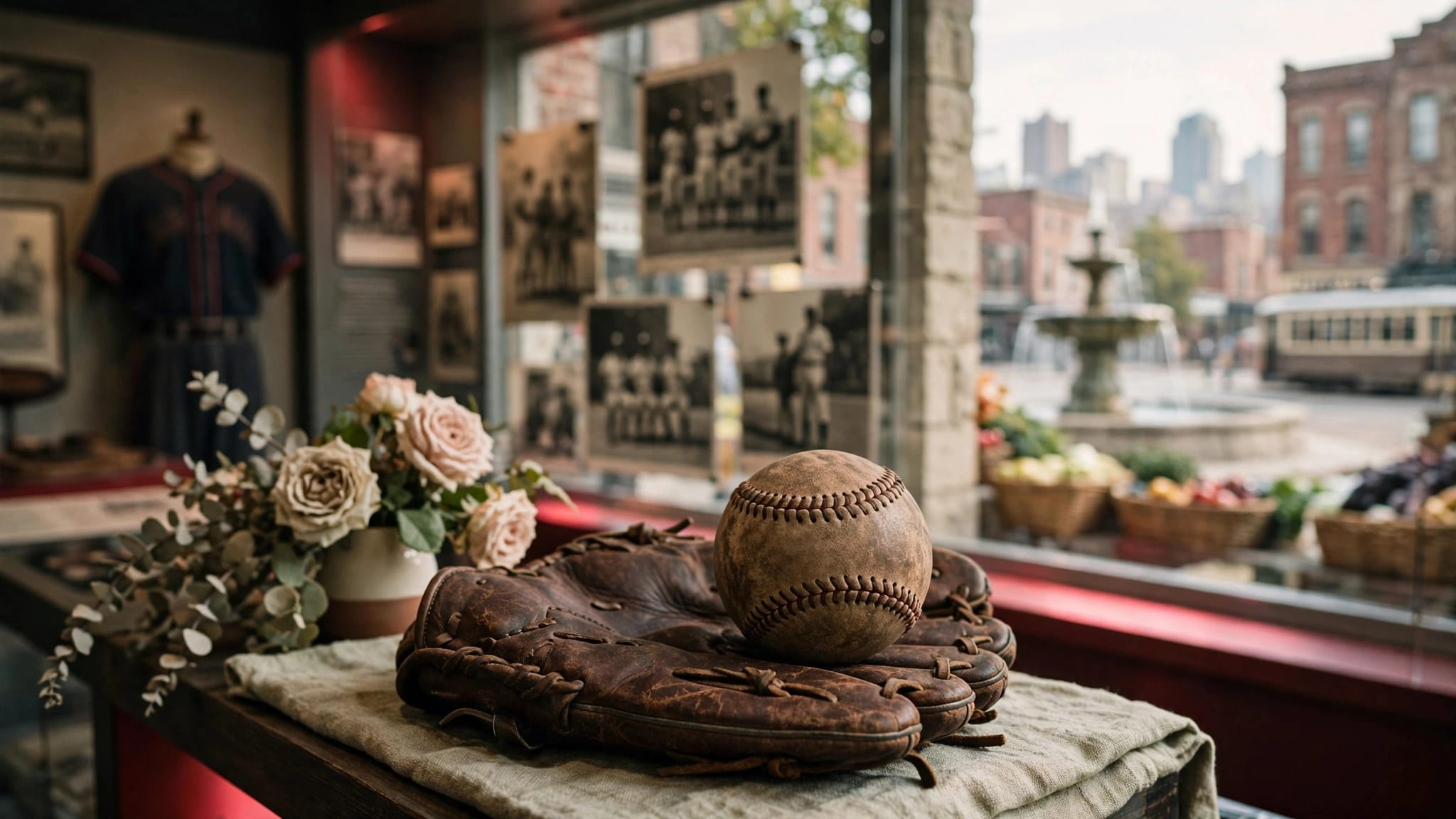
Negro Leagues Baseball Museum: A First-Timer’s Guide

Give yourself more time than you think you’ll need at this historic museum. You might arrive knowing a few famous names, then find yourself reading about a team, a road trip, or a player you’d never heard of.
That’s what makes this Kansas City stop worth slowing down for, whether you’re one of the baseball fans who follow the game closely or someone who couldn’t tell you who’s leading the division.
Start with the practical details, then leave room for the stories inside.
Key Takeaways
- Plan for 90 minutes to two hours in the galleries, and check current hours, holiday schedules, admission, and parking details before you go.
- The museum at 1616 E. 18th St. is in Kansas City’s historic 18th & Vine District, where the Negro National League was organized in 1920 and the Kansas City Monarchs became one of Black baseball’s best-known teams.
- Take your time with the Field of Legends, exhibits, photographs, uniforms, and memorabilia; they connect celebrated players with the teams, communities, and conditions that shaped their careers.
- You don’t need to be a baseball fan to enjoy the visit. The museum shares a broader story of Black achievement, segregation, and civil rights, and it’s easy to pair with the American Jazz Museum nearby.
Planning Your Negro Leagues Baseball Museum Visit
The Negro Leagues Baseball Museum is at 1616 E. 18th St., Kansas City, Missouri, in the historic 18th & Vine District. It shares a building with the American Jazz Museum, so pairing the two is easy. For arrival planning, check your route into Kansas City before you leave, especially during local events.
Hours and how much time to allow
The posted regular hours are:
| Day | Regular hours |
|---|---|
| Tuesday through Saturday | 10 a.m. to 5 p.m. |
| Sunday | Noon to 5 p.m. |
| Monday | Closed, except summer Mondays in June through August |
The Monday exception matters. If you’re visiting in September, don’t carry over somebody else’s summer itinerary.
Museum visitors should confirm holiday schedules and special-event access before heading over. Call 816-221-1920 with questions.
The museum recommends at least an hour for its self-guided gallery. I’d budget 90 minutes to two hours for a first visit. Give yourself closer to three if you enjoy reading every panel and watching the films.
Admission and buying tickets
Posted admission is $15 for adults, $12 for seniors ages 65 and older, and $12 for children ages 5 through 12. Children ages 4 and younger enter free.
Active military admission is free, and veterans pay $10. Museum members also enter free with the required membership card and photo ID.
Tickets are available online or in person at the Extra Innings gift shop. Online tickets are valid for up to 30 days after purchase. Groups of 25 or more should call about group rates.
Budget separately for the American Jazz Museum, since one ticket doesn’t cover both.
Getting There Without the Parking Guesswork
The address is in Kansas City, Missouri, not Kansas City, Kansas. It’s easy to mix them up when planning a metro-wide trip with several tabs open.
Parking and construction guidance can change, so check the museum’s visitor information before you go. It has listed free parking behind the building and, during 18th Street pedestrian mall construction, parking at the southwest corner of 18th and Paseo.
For rear access, the museum has directed visitors along Vine from 17th Terrace. Front and rear entrances are available, but follow current signs rather than relying on an older map.
Give yourself a little extra arrival time. Detours are less annoying when you’re not watching the clock.
If you’re staying downtown, arrange the final leg by car, rideshare, or a checked bus route. Don’t assume the downtown streetcar stops at the museum.
For mobility needs, call ahead to confirm the best entrance and current access conditions. That’s especially useful if construction is affecting the area.
A Little History Before You Walk In
The museum’s history and founding story begins in 1990. Buck O’Neil helped lead the effort to preserve Black baseball history, and the museum grew into its home in the neighborhood where much of the Negro leagues story unfolded.
Why Kansas City belongs in this story
In 1920, Rube Foster and other team owners organized the Negro National League at the Paseo YMCA in Kansas City. The Kansas City Monarchs became one of Black baseball’s best-known teams, with Cool Papa Bell among their stars.
The Negro leagues grew under segregation, when organized baseball excluded Black players. This history predates Jackie Robinson’s 1947 debut, a milestone in baseball integration.
The Kansas City Monarchs and other teams built their own audiences, rivalries, businesses, and traditions while facing unequal treatment on the road and at home. Their achievements and enterprise are also part of the broader civil rights story.
Keep that context in mind as you look at the baseball itself. The players’ achievements deserve attention, and so do the conditions they worked through.
The museum helps you hold both parts of the story together.
Buck O’Neil and the people carrying it forward
O’Neil played for and managed the Monarchs. He later became the first Black coach in Major League Baseball with the Chicago Cubs in 1962.
His storytelling helped generations of fans connect with players whose careers had received too little attention.
Bob Kendrick is the museum’s current president, a position he’s held since March 2011. His work continues that emphasis on sharing the history in a way people can understand and remember.
You don’t need to memorize these dates. Knowing the names gives you a few familiar faces as you move through the galleries.
The Field of Legends Deserves a Slow Look
The Field of Legends is the museum’s signature sight: life-size bronze statues arranged on an indoor baseball diamond.
The statues make the talent honored here feel tangible. Still, resist treating them as a quick photo stop.
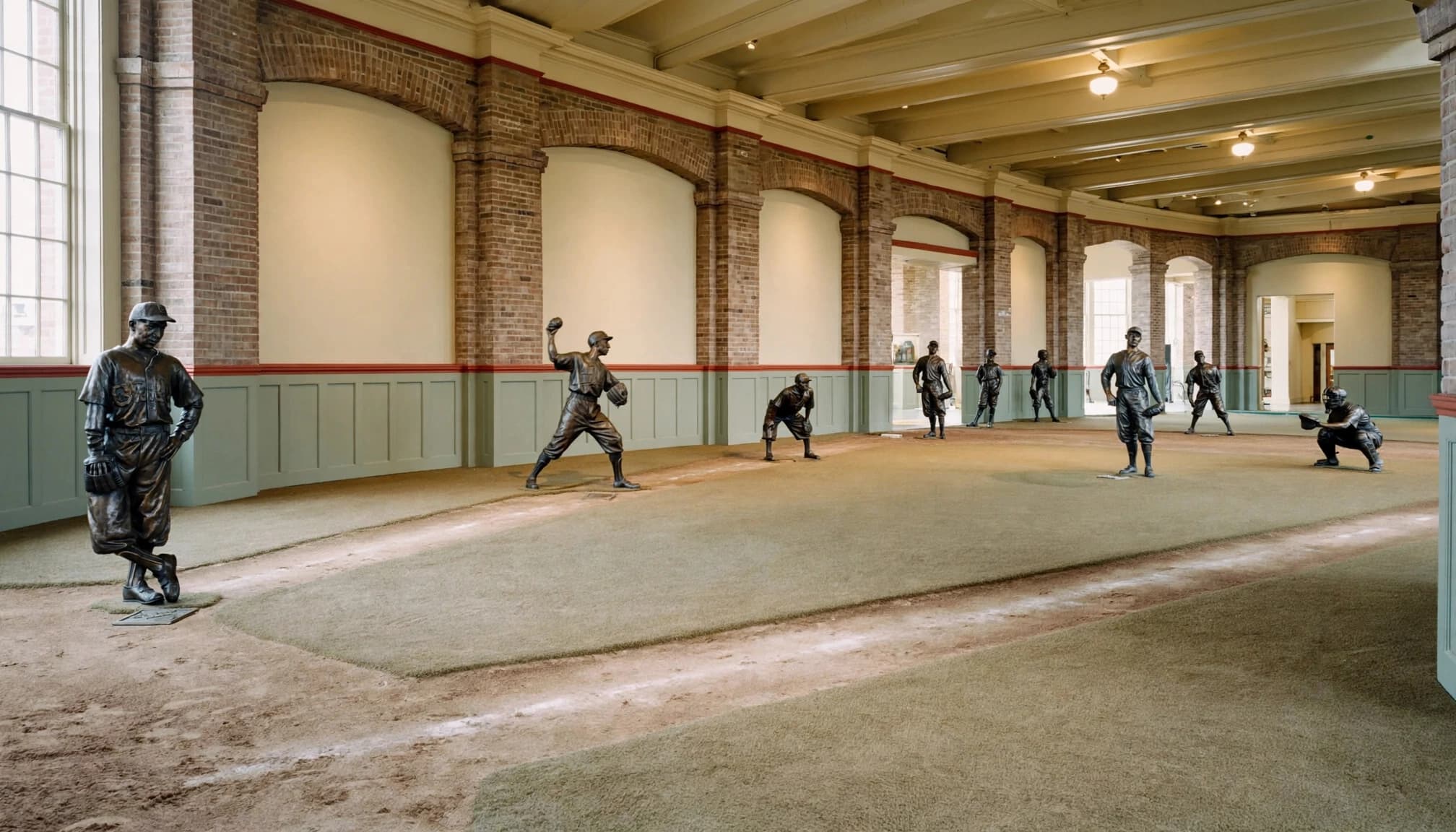
Illustration inspired by the Field of Legends.
Players to look for
Begin with the museum exhibits, which introduce pitching legend Satchel Paige, catcher Josh Gibson, and all-around star Oscar Charleston. Buck O’Neil is honored here, too, alongside speedster Cool Papa Bell.
Satchel Paige’s long career and Josh Gibson’s hitting are useful starting points if those names are new to you. Oscar Charleston and Cool Papa Bell are also worth a closer look, especially if your baseball knowledge mostly comes through familiar Major League teams.
Read the nearby interpretation before moving on. A name can feel distant until you understand what that person did.
Let the galleries give the field its context
Follow the exhibition route instead of rushing straight toward the statues. Photographs, films, and historical displays show how Negro leagues teams built lasting institutions, giving the field deeper meaning.
Pay attention to the Kansas City Monarchs material. The team was part of the Negro National League and became one of the era’s best-known clubs.
Jackie Robinson played for the Monarchs in 1945 before joining the Brooklyn Dodgers in 1947. His entry into the major leagues marked a turning point in baseball integration, not the beginning of Black baseball history.
Negro leagues had already developed successful teams and careers over generations. That connection places Jackie Robinson’s story within a much longer history.
Uniforms, Photographs, and the Geddy Lee Collection
The big names draw your attention first. The smaller objects can hold it longer.
Uniforms, equipment, photographs, documents, and other memorabilia bring the players’ daily lives closer. Take time with the captions, because an object’s owner and date often explain more than its appearance.
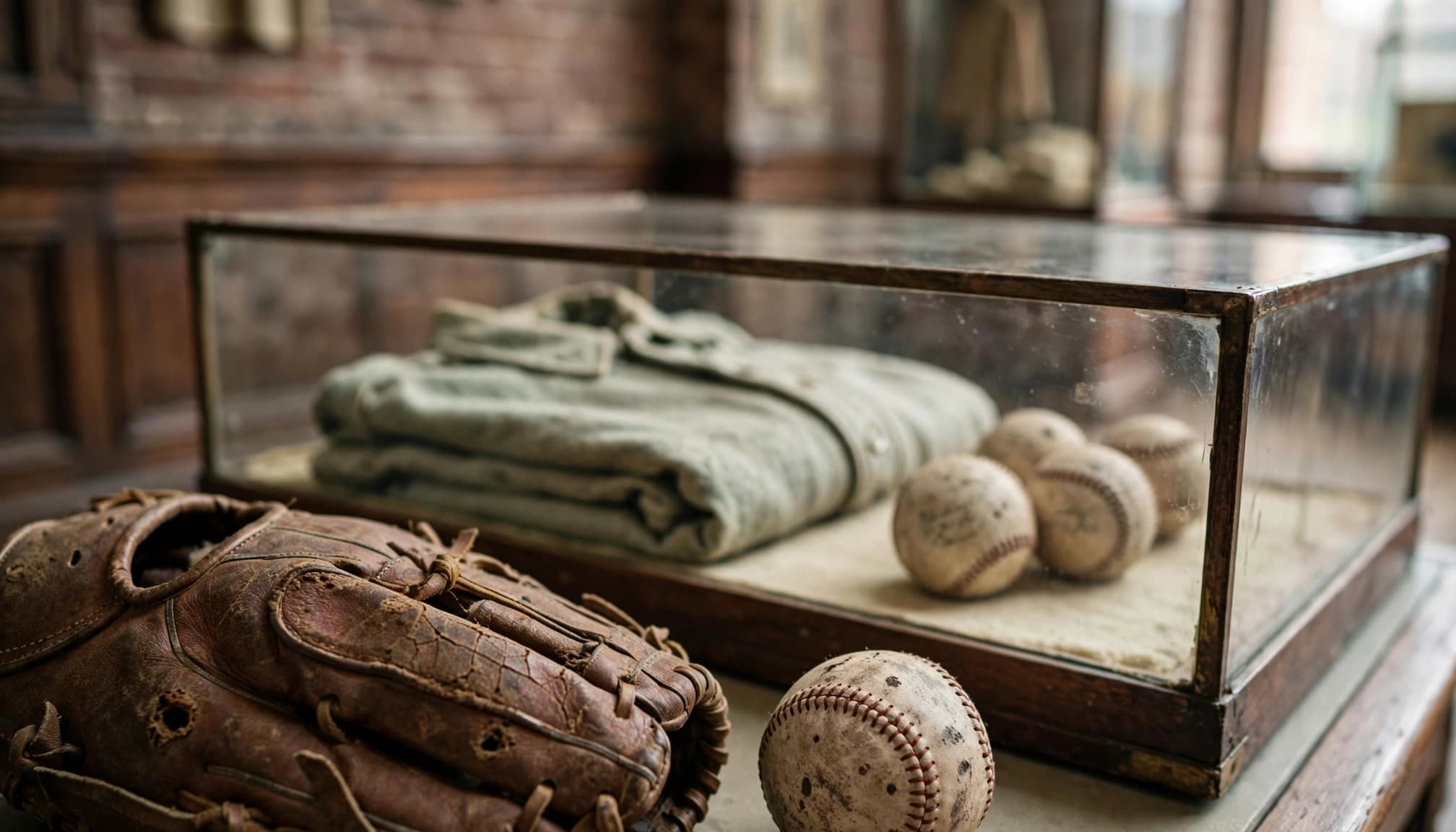
Illustrative baseball memorabilia.
What to notice in the displays
Look at team names, uniforms, and the places shown in photographs. You’ll start connecting individual careers with the cities and communities that supported Negro leagues baseball.
The written material deserves some patience. A display can cover travel, ownership, working conditions, or an entire team’s history in a fairly small space.
The displays can also help you learn about players such as Cool Papa Bell beyond the statistics. If you’re visiting with someone, compare what caught your attention afterward. People often remember different details, and that makes the ride home more interesting.
You don’t have to read every word to come away with a fuller picture.
Yes, that Geddy Lee
Rush bassist and vocalist Geddy Lee donated 400 autographed baseballs to the museum in 2008. The Geddy Lee Collection is an ongoing museum display.
It’s an unexpected connection for music fans, and a good reminder that preserving baseball history takes many kinds of supporters.
Spend a moment considering the signatures themselves. Each one connects the collection to a person whose story might otherwise be known mainly through photographs, statistics, or someone else’s memories.
Visiting With Kids, Non-Fans, or a Full Weekend Schedule
The Negro Leagues Baseball Museum in Kansas City has plenty to offer baseball fans, but you don’t need a background in the game to enjoy it. Start with the people, then let the sports details follow.
For children, choose a few stories rather than expecting them to read every panel. The statues and uniforms give you something concrete to discuss.
Explain segregation in plain, age-appropriate terms: Black players were denied opportunities because of their race. The stories also highlight skill, teamwork, enterprise, and the communities that supported these teams, as well as the broader history of civil rights.
Ask staff about current photography rules before taking pictures. For questions about seating, sensory needs, or accessibility, contact the museum ahead of time rather than assuming the setup will suit everyone.
Check the museum’s featured exhibitions before your visit, too. A temporary display may deserve extra time beyond the permanent galleries.
If your group reads at different speeds, agree on a meeting time instead of trying to keep everyone beside the same panel.
For a museum-heavy weekend, put the Nelson-Atkins Museum of Art on another day. Three museums in one afternoon can become a lot of looking and very little remembering.
Make a Half-Day of 18th & Vine
When you’re choosing things to do in Kansas City, keeping part of your day in one neighborhood makes planning easier.
The 18th & Vine District brings baseball history, jazz, food, and walkable landmarks together. Its museums help explain the neighborhood’s Black business and cultural life. They connect the Negro leagues and the Negro National League, founded by Rube Foster, with Jackie Robinson’s legacy and the broader civil rights story.
A comfortable daytime plan
For a Tuesday-through-Saturday visit in Kansas City, this sequence leaves room to enjoy both museums:
- Arrive around 10 a.m. and allow 90 minutes to two hours at the baseball museum.
- Step outside for a short walk past neighborhood landmarks such as the Gem Theater.
- Have lunch nearby. Arthur Bryant’s Barbeque on Brooklyn Avenue is a familiar option.
- Return for the American Jazz Museum if you want to continue the afternoon.
Check restaurant hours and the jazz museum’s admission before setting the schedule.
On Sunday, start later because the baseball museum opens at noon. I like keeping lunch flexible here. It’s easier to enjoy the last gallery when you’re not already late for a table.
If you want to stay for music
The Blue Room is a natural evening option, but confirm its performance calendar before building your day around a show.
The Mutual Musicians Foundation is another important neighborhood institution to know. Check its current public programming rather than assuming music will be happening whenever you arrive.
Leave space between the afternoon museums and evening plans. A meal and a break make a long cultural day feel much more comfortable.
Frequently Asked Questions
How much time should I allow for the Negro Leagues Baseball Museum?
The museum recommends at least an hour for its self-guided gallery. For a first visit, plan on 90 minutes to two hours, or closer to three if you want to read most of the panels and watch the films.
What are the museum’s regular hours?
It is generally open Tuesday through Saturday from 10 a.m. to 5 p.m. and Sunday from noon to 5 p.m.; it is closed Mondays except for summer Mondays in June through August. Confirm holiday hours and special-event access before visiting.
How much does admission cost?
Posted admission is $15 for adults, $12 for seniors ages 65 and older, and $12 for children ages 5 through 12; children 4 and younger enter free. Active military members and museum members enter free, while veterans pay $10; check the museum for current details.
Can I visit the American Jazz Museum on the same trip?
Yes. It shares a building with the Negro Leagues Baseball Museum, making it easy to visit both during a stop in 18th & Vine. Each museum requires separate admission, so budget for both tickets.
Leave Room for the Stories
The Negro Leagues Baseball Museum rewards a visit with breathing room, offering a meaningful pause in Kansas City. Let its galleries introduce you to players beyond the names you already know.
Let the stories settle in before moving on. The ones you stop for are likely to be the ones you remember.
For more local outings and events, Sign Up For Our Weekly Newsletter.







One Comment
Comments are closed.