Arabia Steamboat Museum: A First-Time Visitor Guide

A boat sank in the Missouri River in 1856, and much of its cargo is still here to see, thanks to River Salvage Inc. The Arabia Steamboat Museum makes frontier life feel surprisingly familiar, as a good history museum should. People needed shoes, dishes, tools, and something decent to wear back then, too.
But timing matters for this visit: the museum’s current City Market location is scheduled to close on November 13, 2026.
I would put this one on the calendar sooner rather than later, and leave enough room to enjoy the neighborhood afterward.
Visit Before the City Market Location Closes
As of October 2026, the announced November 2026 closing date for the current City Market location is November 13, 2026. That date applies to this museum location, not to the collection’s future.
In KSHB’s report on the closure, the museum’s lease is expiring, and Kansas City isn’t extending it. Manager Matt Hawley also cited limited parking and a need for more room to display artifacts.
Those are related, but separate, issues. The lease determines whether the museum can stay in this building. Limited parking and display space help explain the proposed museum relocation.
Leavenworth, Kansas, and Marshall Junction, Missouri, have been discussed as possible destinations. Neither is confirmed in the October 2026 reporting, and Leavenworth remains only a possibility.
I wouldn’t plan a future trip around either destination yet. If you’re traveling mainly for the museum, confirm its operating status before booking, especially for a visit close to the announced closing date.
Arabia Steamboat Museum Hours, Tickets, and Location
The Arabia Steamboat Museum, a history museum, is at 400 Grand Blvd., Kansas City, MO 64106, inside City Market in the River Market neighborhood. It’s on the Missouri side, even though the buried wreck was recovered on the Kansas side.
The October 2026 visitor listing gives hours of Monday through Saturday, 10 a.m. to 5 p.m., and Sunday, noon to 5 p.m. Last admission is listed as 3:30 p.m. daily.
That last-admission time is easy to miss. Arriving at 4 p.m. won’t work, even though the building’s listed closing time is later.
The October 2026 admission prices listed by Visit KC are:
| Visitor | Admission |
|---|---|
| Adults | $16.50 plus tax |
| Seniors age 60 and older | $15.50 plus tax |
| Children ages 4 through 14 | $6.50 plus tax |
| Children age 3 and under | Free |
Two adults and two children in the paid children’s category would spend $46 before tax. That’s useful to know before adding lunch and parking to the day.
Individual and family reservations aren’t required under the posted visitor policy. Visits are self-guided, and school or organized groups should contact the museum about rates and arrangements.
Confirm current hours and admission before leaving home. Visitor information can change, and I wouldn’t want your whole afternoon to depend on an old listing.
Parking and Getting to River Market
Well, parking is the part of this outing that deserves a little patience. The museum sits in a busy market neighborhood, and weekend shopping brings more people into the same streets and lots.
The museum’s visitor information describes two hours of free City Market parking Monday through Friday. Don’t assume that offer applies on Saturday or Sunday. Read the signs where you park, including time limits and payment instructions.
I would allow extra arrival time rather than count on a space beside the entrance. If your group needs a shorter walk, decide on a drop-off plan before everyone gets frustrated circling the block.
The fare-free KC Streetcar is another option if you’re already staying or parking along its route. Check current service and choose a River Market stop that suits your walk.
If mobility, wheelchair access, or stroller use will affect your visit, contact the museum before coming. It’s better to get an answer about your needs than guess from exterior photos.
How a Steamboat Ended Up Under a Cornfield
The sinking happened quickly
The steamboat Arabia struck a submerged tree snag near Parkville on September 5, 1856. The snag punctured the hull, and the boat sank with roughly 200 tons of cargo aboard.
Those goods were headed upriver to frontier communities. The shipment included store supplies and equipment such as a steam engine, items needed by the people who lived there.
The people aboard survived, but the goods stayed behind. Over time, the Missouri River changed course, and sediment buried the wreck beneath land that eventually became a Kansas cornfield.
The museum’s account of Arabia’s history at this history museum connects the sinking with the river’s changing channel. It also helps explain why searching the present-day river wouldn’t have found the boat.
The recovery became another story worth hearing
The wreck was discovered in 1988, about 45 feet underground and roughly half a mile from the modern river channel.
Members of the Hawley family and Mackey family worked through River Salvage Inc to recover it. River Salvage Inc began excavation on November 13, 1988, with permission from landowner Norman Sortor.
Finding the boat was only the beginning. Recovering the goods meant dealing with groundwater, mud, heavy equipment, and objects that couldn’t simply be dried off.
I think this is what makes the story stick. You get the original river disaster, but you also get people deciding to find it and figuring out what to do with everything they brought up.
The cargo makes frontier life feel familiar
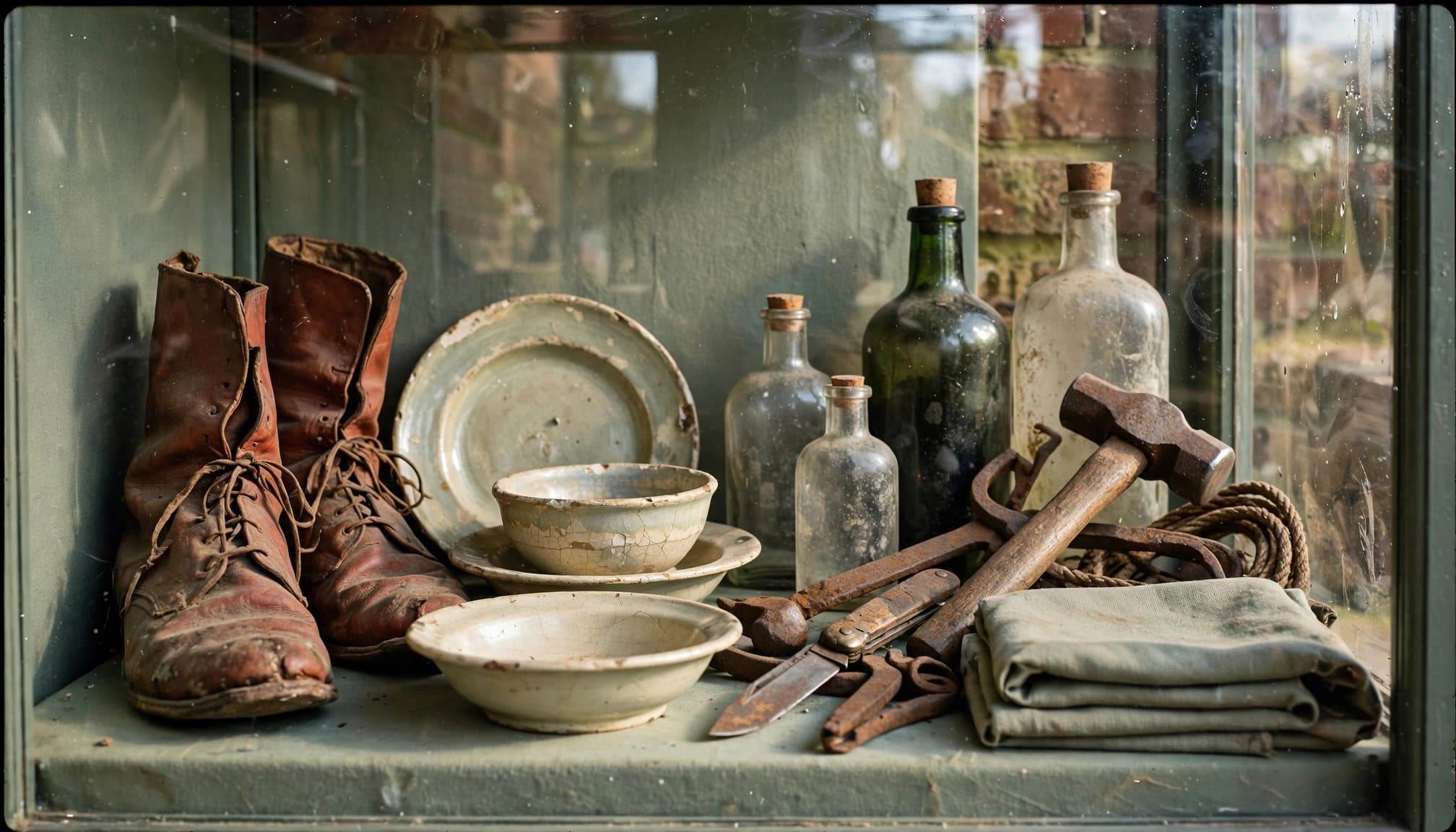
Illustration of frontier goods like the cargo recovered aboard the Arabia.
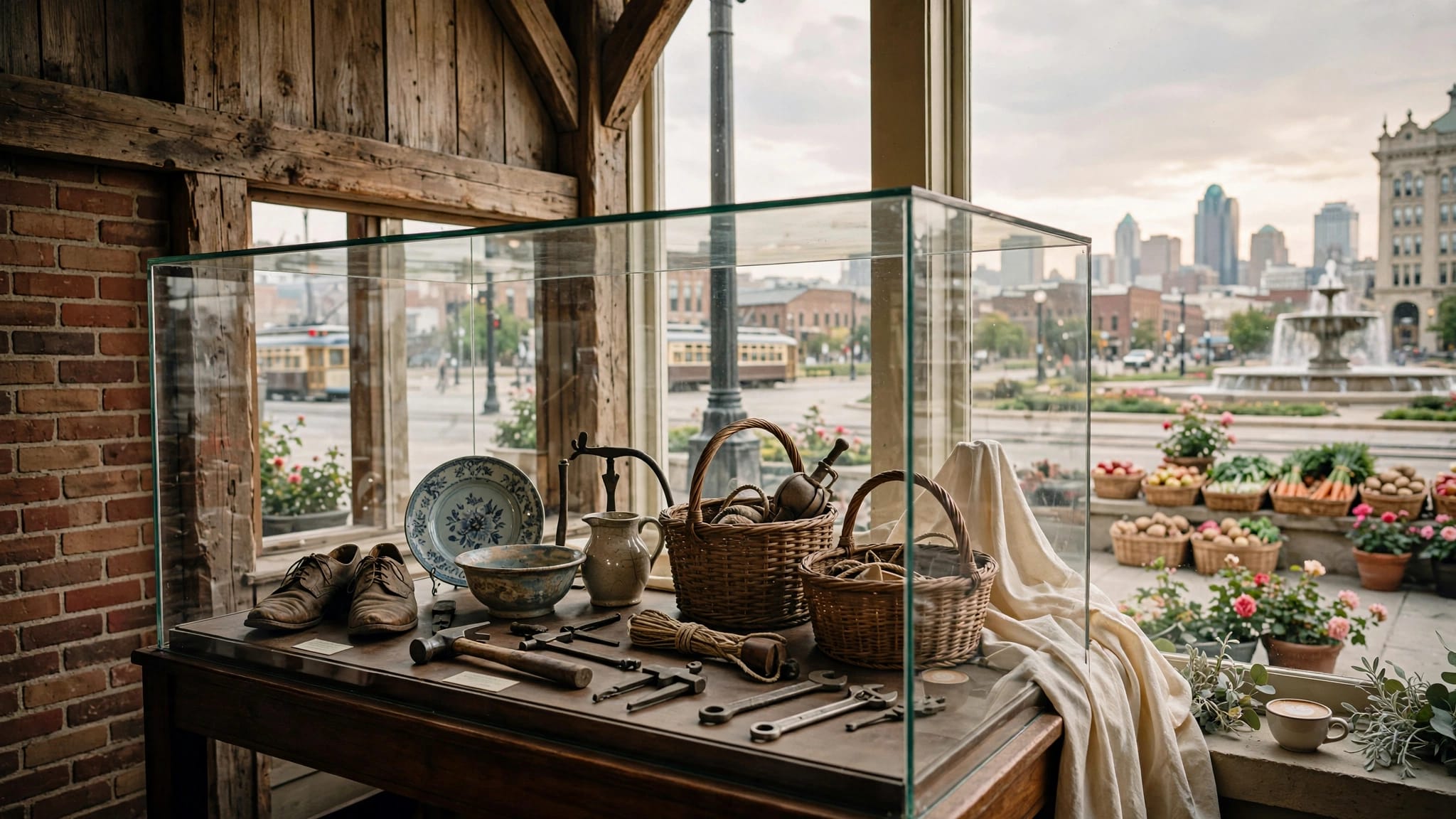
The collection recovered by River Salvage Inc includes dishes, glassware, tools, clothing, leather goods, buttons, beads, and bottled food. Visit KC’s museum fact page lists 4,000 boots and shoes and 5 million glass trade beads among the recovered cargo.
I like the ordinary objects here. A dish or a shoe gives you something recognizable to think about, and then you remember how long it spent underground.
Look beyond the quantity, too. Notice materials, patterns, sizes, and how goods were packaged for transport. The collection gives you a close look at what merchants expected people to need or want in 1856.
These goods traveled together as a commercial shipment, so you see whole groups of objects rather than a single surviving example. They make frontier life feel familiar.
The deck and machinery give the story scale
Visit KC describes a 171-foot-long, full-scale reproduction of the main deck. Original boilers, a steam engine, and a paddle wheel help you picture the working boat.
That distinction matters: the reproduced deck helps explain the vessel, while recovered machinery connects it to the actual wreck. It also offers a glimpse of the historic preservation work discussed next.
The introductory videos are worth watching before you spend much time with the cases. Once you understand the sinking and recovery, the objects have more context.
You don’t need to read every label in order. Pick something that catches your attention and give it a few minutes.
Why the Preservation Lab Deserves a Stop
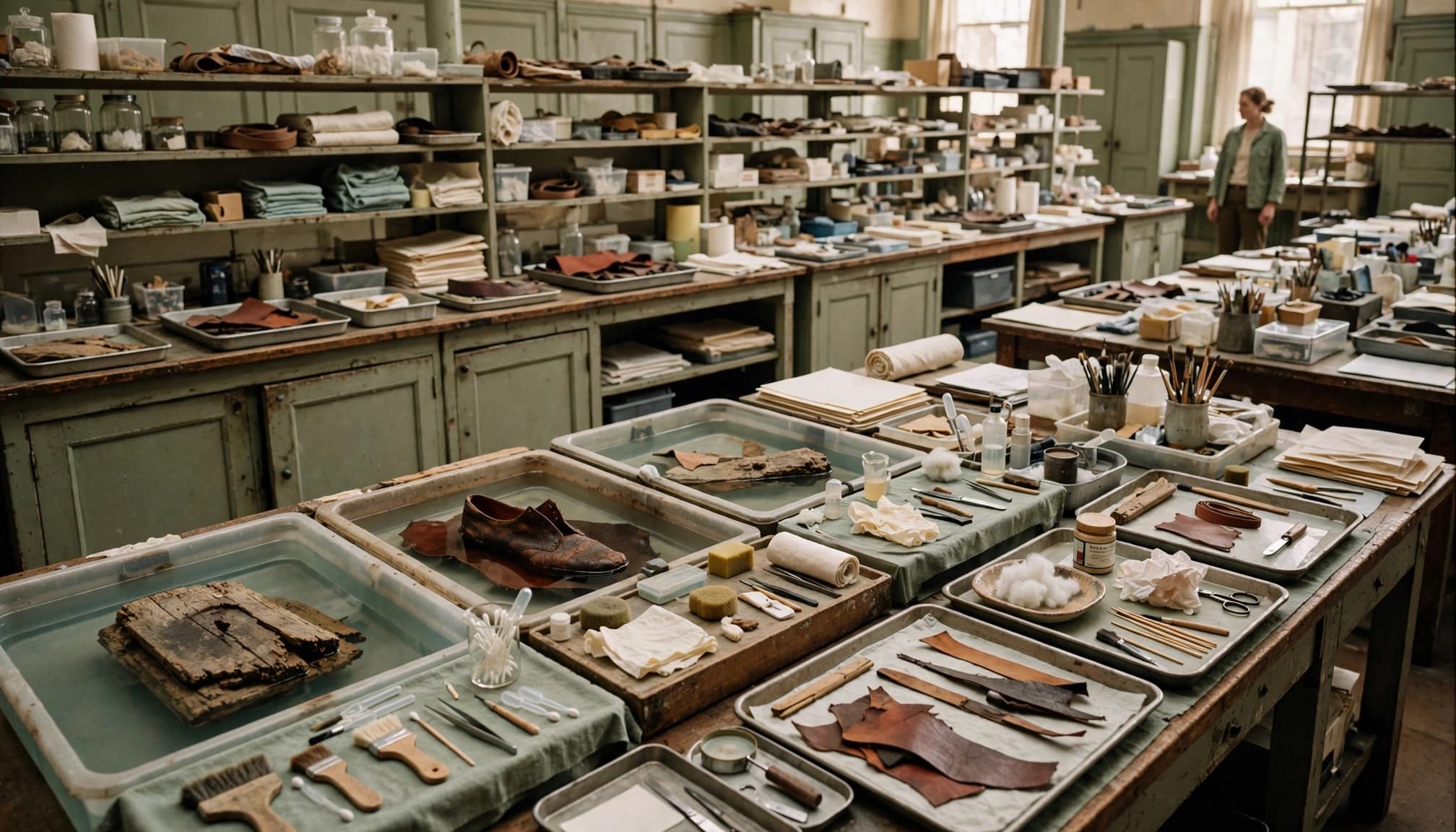
Illustration of conservation work with recovered wood and leather.
The open preservation lab is one of the museum’s most useful stops. It shows why recovery and preservation are different jobs, and how historic preservation continues after an artifact is found.
Waterlogged organic materials can look sound while wet, then shrink or become distorted as they dry. Wood, leather, and fabric each need treatment suited to their condition.
As described in the museum’s preservation history, polyethylene glycol, usually called PEG, has been used to treat some waterlogged wood. It helps replace water within the material and support it during drying.
Not every artifact receives the same treatment. A leather boot and a ceramic plate have different problems, even if both came from the same muddy cargo hold.
Staff activity varies, so don’t promise children they’ll see someone restoring an object at a particular time. The lab is still worth a look when work isn’t underway.
The display cases show the finished results. The lab helps you appreciate how much work happened before those objects could go behind glass.
How Much Time to Allow for Your Visit
Give yourself room to slow down
The museum recommends about 90 minutes for a self-guided visit. I’d budget 90 minutes to two hours, plus arrival and parking time.
Two hours is my recommendation, not a required tour length. It gives you room for the videos, cargo displays, machinery, and preservation lab without watching the clock.
If you like reading labels, allow more time. If you’re visiting with younger children, follow their interest rather than trying to give every case equal attention.
Shoes, bottled food, and the steam engine give kids something concrete to compare with things they know. A few good conversations can be more enjoyable than reading every panel aloud.
Keep the rest of the outing close by
There are plenty of things to do in Kansas City, but this visit pairs well with staying in one neighborhood.
On a weekday or Saturday, a 10 a.m. museum arrival leaves room for lunch and a walk afterward. On Sunday, remember the noon opening and reverse the order if you want an earlier start.
Our River Market neighborhood guide can help you put together the rest of the outing. I’d leave that part flexible, especially if someone in your group gets absorbed in the exhibits.
One museum, a meal, and some wandering make a comfortable plan. You don’t have to fill every hour.
Key Takeaways Before You Go
- The current location is scheduled to close November 13, 2026, and a replacement location remains unconfirmed.
- Last admission is 3:30 p.m., earlier than the museum’s 5 p.m. closing time.
- Budget about 90 minutes to two hours inside, and leave extra time for parking.
- Watch the introductory videos, then make time for the cargo displays, steam engine, paddle wheel, and preservation lab.
Frequently Asked Questions
Do you need a reservation?
Individual and family reservations aren’t required under the posted policy. Contact the museum ahead of time for school visits or organized group arrangements.
Can you see the entire original steamboat?
The museum displays recovered artifacts and the original steam engine alongside a full-scale deck reproduction. Expect a museum presentation of the wreck and its cargo rather than an intact boat.
Is the museum moving to Leavenworth?
Leavenworth has been discussed, but October 2026 reporting doesn’t confirm a new location there. A possible destination shouldn’t be treated as an announced reopening plan.
Is this a guided tour?
The posted visitor information describes self-guided visits. You can spend longer with the displays that interest you rather than keeping pace with a scheduled tour group.
Make Time for the Ordinary Things
The Arabia Steamboat Museum gives you a chance to stand beside goods that were meant for everyday use in 1856. Those familiar objects make a long-ago river disaster easier to understand.
For a first visit, leave yourself enough time to follow your curiosity. Check the schedule, sort out parking, and let the small details hold your attention for a while.